
Discomfort with the Death of Pharaoh
Text: Exodus 14:21-31
Disney movies are notorious for having the villains in the movie fall to their deaths: Scar in the Lion King, Gaston in Beauty and the Beast, bad witches from Tangled to Snow White to Sleeping Beauty – all plunge to their demise. This way, the good and gals don’t have to be blamed, the problem of evil is taken care of. No mess. No fault.
When my kids were littler and watching these kinds of movies more often, I was (and am) annoyed by both the good/evil disneyfication of stories and the killing off of the villain. I want nuance! I was looking for reconciliation, for redemption for villainous epiphanies.
And as much as I hate to admit it, life doesn’t lead to reconciliation – and neither does the Bible. There is vengeance. There is death and in this story it’s inescapable. Hundreds of people. Pharaoh’s entire cadre of chariots. Consumed by water. By God’s hand. I hate it.
But what you see depends on where you sit. And for the purpose of this story and the place it plays in the biblical narrative, I sit in the seat of pharaoh. So yes, I guess I’m going to have a problem with these deaths. This is not a story written for or about me. It was written for a people enslaved, a people oppressed, a people traumatized by those experiences. It is also the defining story of the Hebrew Bible.
Because the Israelites story is one of trauma, when they are faced with an uncertain future, a future that looks like probable death, they are tempted to give up. They are tempted to return to the enslavement they’ve known. Pharaoh is harsh, they think, but we might live. They think, if we go back, maybe things will change! Pharaoh’s heart has softened before.
Moses’ response is clear: “Stand firm and see the deliverance that God will accomplish for you today.” Though the way forward seems like death, the return to Egypt means punishment and enslavement. Do not go back!
To be delivered from this moment by the hand of God is the story of the Hebrew people up to the time of Jesus and beyond: I am the God who brought you out of Egypt. It’s repeated over and over and over like a refrain. They are the people chosen by Yahweh for deliverance. The community shaped by God’s salvation from the oppression of Pharaoh. Sitting in the seat of Pharaoh, I am not the one who needs deliverance. I am a part of the culture from which oppressed people need deliverance.
I am uncomfortable with a story in which hundreds, maybe thousands of people are utterly destroyed. But the place I’ve come to, is that it’s the only way this story can have the power that it has. A community that has been oppressed and enslaved needs a story in which God has the power to destroy the enslaver when they cannot. [sigh] The bad guys need to die. Pharoah needs to die. And Miriam and the Israelites need to sing about it. And scripture and story need to tell and retell it. It is not my song. It is not my story. There are just some stories that aren’t written for me.
Ages ago, on the podcast Code Switch the film reviewer Bilal Qureshi talked about stories told through film and the ways the white audiences experience and respond to movies, and how that’s reflected in published reviews when 80+ percent of reviewers are white men. He talked about the disparity of responses when the story is about communities of color. He used the example of Barry Jenkins’ movie “If Beale Street Could Talk.” He said,
It springs from the cultural production of black America in terms of the Baldwin source material, Barry’s work as a writer and a filmmaker, the actors who were there… details, some texture, some nuance that I think a black audience is going to respond to in a stronger way and black critics will as well.
Not that white folks won’t like the movie, or even find if moving and powerful, but it’s not for them. Thankfully there have been many examples like that in recent years. Those stories don’t have to be for me for me to enjoy them, and through them to get a hint of the experience of those communities. I am ceding my review of the Exodus narrative to people who find themselves and their experience in it.
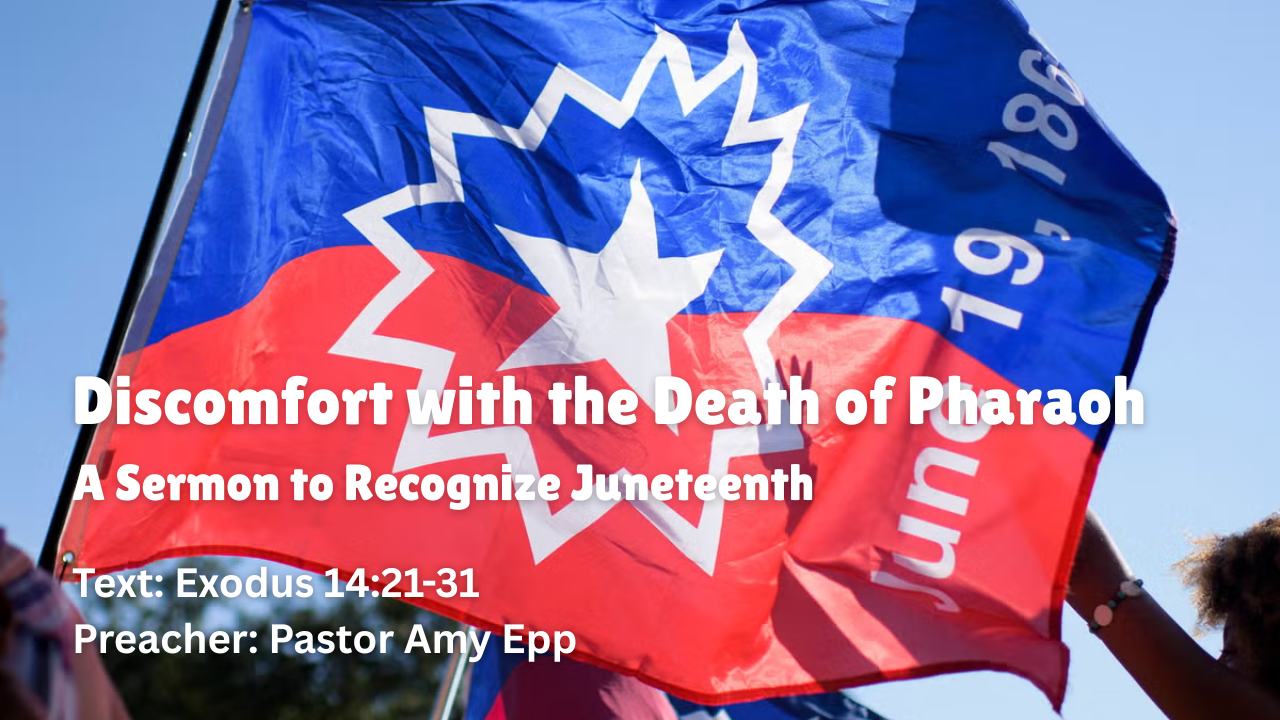
The story and celebration of Juneteenth are not my story or heritage. But it’s important to me to recognize Juneteenth and the history of enslavement – even though my ancestors did not directly participate – because it helps me understand the history and culture of others in my community. And secondly, I want to continue to participate in freedom and liberation for my neighbors and community today. Even if it (maybe especially if) it makes me uncomfortable.
I need to hear the story again and again – and I’m grateful it’s a recognized holiday – and I need to deepen my understanding of it. Because though liberated, there was and still is a longer journey to make. Freed slaves most often had no choice but to work for pennies for their former enslavers. And the 13th Amendment still allowed enslavement for prisoners, the legacy of which is very much alive today.
Because I experience the privilege of whiteness I feel my responsibility to use that privilege in ways that empower and liberate. Making choices with my resources and my voice and my relationships that uplift Black people and communities and businesses.
The story of the Red Sea is one of those things that I will need to accept with discomfort. I don’t like it that the bad guys die at the end. But I am grateful for the story. Grateful for a God who saves. Grateful for depth this tradition and narrative and God were the family and story of Jesus, whom I follow. Grateful that in Jesus I have a story of deliverance and salvation that demonstrates non-violence and love.
May we praise God for the liberation of God’s people from enslavement. And may we be committed to ongoing liberation from all captivity and oppression.